

The sketchbook assignment

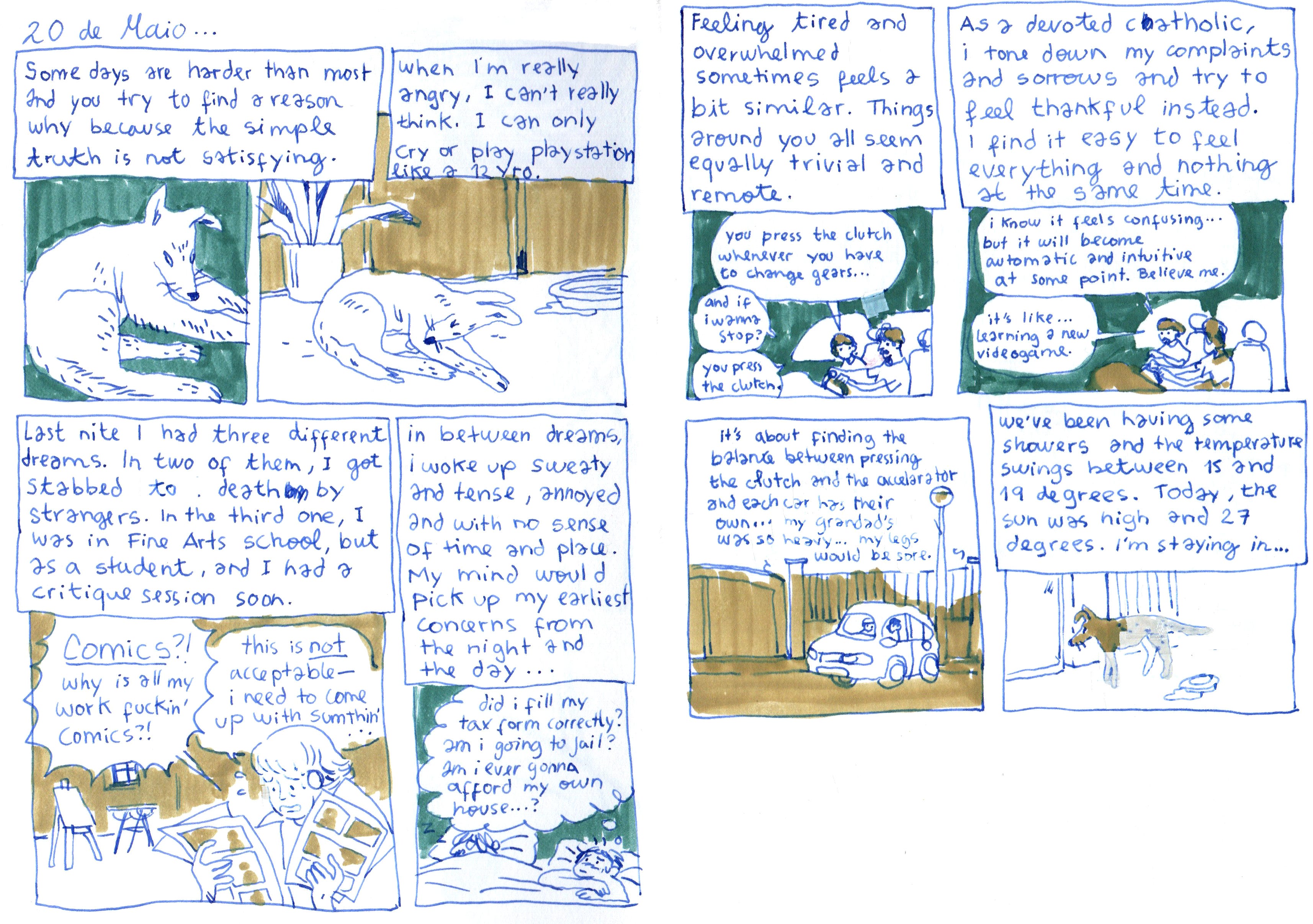
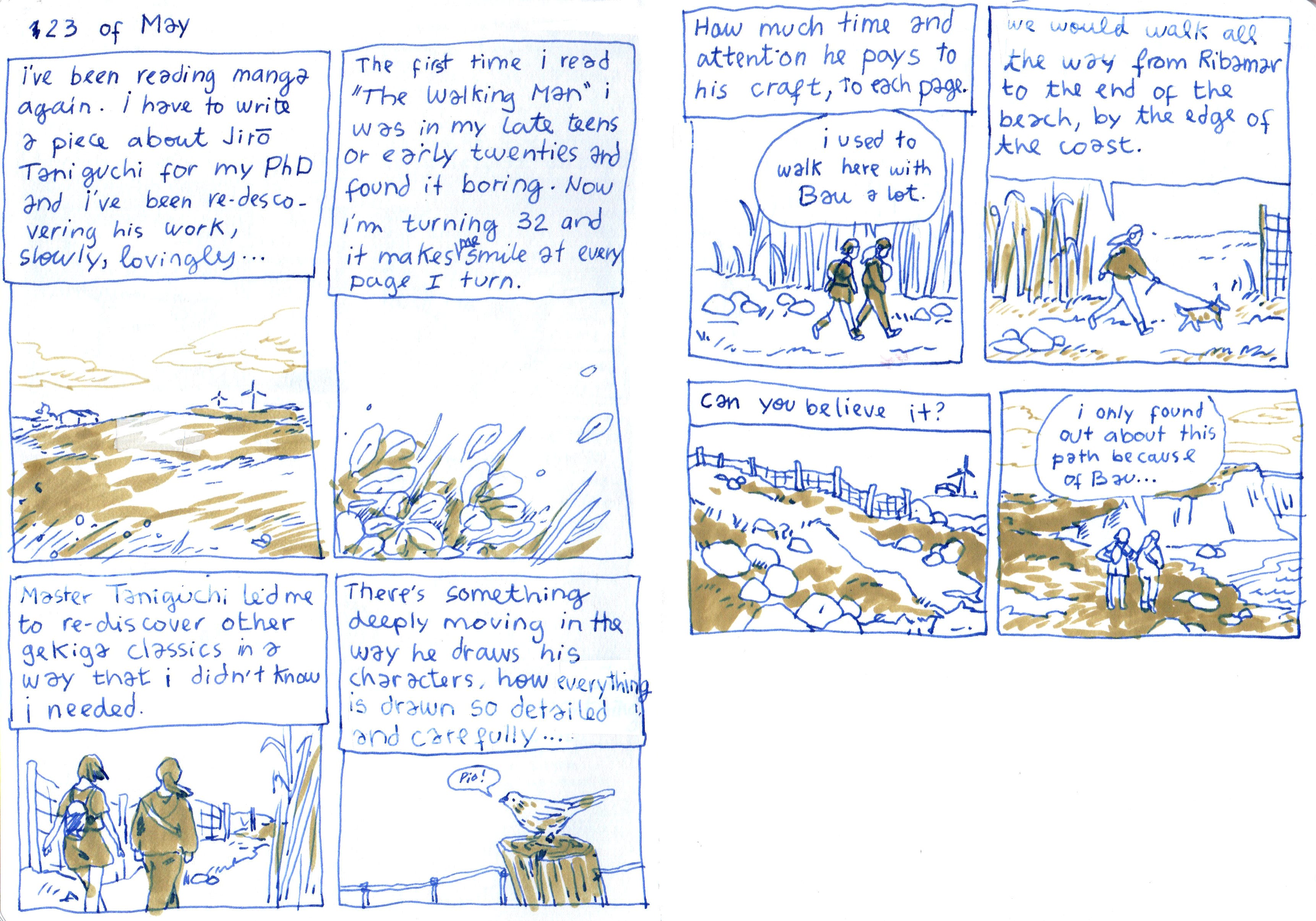
Yesterday, I had the second session of evaluations at the university where I teach. It’s a dreadful time of the year, both for students and teachers, in which we’re forced to attribute a number to one’s progress (or lack of it). It’s unfair math. Putting numbers and grades aside, it’s nice because it is the time of the semester when we reflect on the work done.
I asked my students to fill a sketchbook during the entirety of the semester. I told them from the start that they would have to deliver it by the end of the semester, and I would review it like any other project. Despite knowing that most of them already have sketchbooks, I asked them to get a new one, the cheapest they could find, and use it to sketch out the ideas for the assignments, but mostly to fill it with everything else. The point was to start clean and anew on a blank page.
I wanted to give them a personal assignment, apart from the ones we do in class, something they would do slowly, throughout the semester on their own and see where it would lead. In the beginning, we would start the classes with simple prompts to fuel ideas to fill out the sketchbook, things like:
Go outside the classroom and search for things that start with the first letter of your last name. Make a list.
Draw a map of the university building according to your collective memory of it, no visual or textual exterior references.
Listen to a given song and draw whatever comes to your mind.
And et cetera… besides these prompts, they were asked to write daily notes on one thing they see, one thing they hear, said or thought every day. Also, a feeling, a secret or a recurrent dream. After a couple of weeks, I stopped suggesting to them what to do with it and hoped they would have found their own way.
I stole the “semester sketchbook” idea from Lynda Barry’s pedagogy because I’ve also been in deep need of reconnecting with my craft. And to have fun. My students know that I often use them to test out ideas, exercises and prompts, but I’m not sure if they know how much they surprise me and teach me about the craft itself, and even myself.
Teaching can sometimes feel a bit hopeless, not because of the students, but because of everything around them. You end up questioning a lot of things, your own practice, methods and structures, but also the goals, the purpose of what you teach, and its use (or lack of) in the current state of the world. What do you talk about in a comics class in 2026? Why would you study narrative drawing today? The answers are many…
You want the classroom to be a safe place to experiment, think, practice and fail, but you still feel held by the institution’s evaluation rules and parameters. You want to focus on the joy of learning and creating, but they can’t help but stress about getting good grades, please their parents, obtain their diploma, so they can get a job. You don’t need to tell the students about the truth and the world out there, or the challenges they’ll have to endure, because they know them well. There are more and more conversations around anxiety, desperation and hopelessness towards the state of the world, the future. They look for answers in me that I don’t have; I’m just as confused, but I want them to feel confident. I feel all these dreams, hopes and expectations, and I try to nurture them, while still remaining realistic, honest and grounded. I usually go home unsure if I’m doing a good job.
Last week, I finally collected the sketchbooks and went over them. By the end of another demanding and tiring semester, the sketchbooks showed another side of the story. Despite the looming anxiety that overflows our talks, I was moved by how my students found in their sketchbooks a place to express, explore and dive into the things they believe and love. I learned about their thoughts, feelings and creative process. I went over what they saw, said, thought and dreamed. Even if a lot was fiction, it was still from their hands and imagination. I realised that, until now, I didn’t know most of my students’ handwriting.
I never demanded that they actually finish the whole sketchbook, but I was impressed by how many of them did. Some of them even got a second notebook by the end of the semester. I went through these sketchbooks with curiosity and compassion, but feeling as though I was reading something I shouldn’t have, something that didn’t rightfully belong to me. I guess that happened because these sketchbooks became really personal and unique, and reading someone’s personal experience, even with their consent, always feels like trespassing to me.
I was surprised when some revealed to me that before this one, they had never had a sketchbook. I was happy to hear that for a lot of them, the sketchbook not only was the best part of their semester, but it also became a habit.
And now, it feels even more ridiculous that I have to put a grade, a number on this. What is “this”, really, that I have to evaluate?
One student told me that the sketchbook was the only assignment, the only place, where they could draw. They said that most of their classes and assignments are done on computers now. I agreed with them that there’s a certain pleasure and fun that can only come from paper, but they added, “it’s not just drawing and writing on paper. For me, it was the ‘thinking’ part. I am never really asked about what I think. While working on this sketchbook, I never thought I could come up with so many ideas, but I did. In most classes, I’m just told what to do, and I do it. But in this class, on this sketchbook, that was not enough.”
I think the hardest thing to admit to your students, but mostly yourself, is that the creative process is not always easy and not always fun. Drawing, writing and thinking are not always enjoyable because it’s not straightforward, it’s not predictable. There’s a lot of figuring it out, improvising and experimenting. There’s a lot of stuff you only realise way later, after you're done. There’s a lot of progress that only happens when you fail. There are a lot of things that can’t be numbered or qualified, compared. What I still believe education can provide is the tools to navigate, understand and take advantage of all this mess. What I learned from talking, but mostly listening and reading my students, is that when one realises that they have the ability to think, to feel and to create from themselves, the rest doesn’t seem so scary anymore. It’s powerful.
Thank’s for standing by,
Joana
Such a great read Joana, your writing flows so beautifully!
And it made me want to trust more in my sketchbook and pick it up even more often.
Thank you for your work.
Read the text first and was in awe of how eloquently you can put this whole experience into words, and how it's one of the best, most vulnerable and clear demonstrations of reflective practice. Then I went for the images, and they got me straight in the heart 🩷 just... wonderful.